
Are Your Green Claims Valid? How EPDs Prevent Greenwashing in the UAE Construction Market
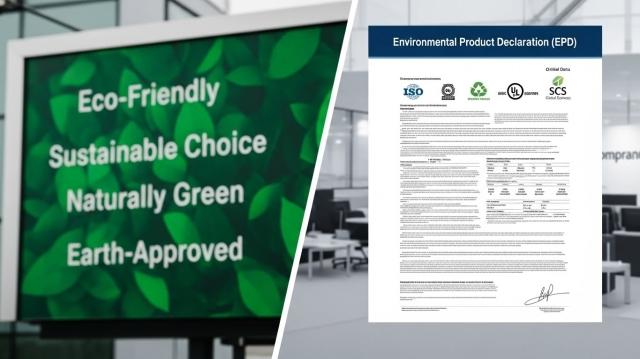
Walk through any construction trade show in Dubai or Abu Dhabi and you'll see green everywhere. "Eco-friendly." "Sustainable." "Low-carbon." "Environmentally responsible." Every booth promises environmental leadership, yet somehow these claims all sound exactly the same—and equally vague.
Here's the uncomfortable truth: the UAE construction market is drowning in unsubstantiated environmental claims. Some are honest but imprecise. Others are deliberately misleading. And the consequences are getting serious as regulators, developers, and sustainability consultants become increasingly sophisticated at spotting greenwashing.
Environmental Product Declarations have emerged as the antidote to this credibility crisis. Not because they're perfect, but because they replace marketing spin with verified data. Let's talk about how EPDs separate genuine environmental performance from clever branding—and why this matters more than ever in 2025.
The Greenwashing Problem Nobody Talks About
You've seen these claims on product literature:
- "Made with sustainable materials"
- "Reduces carbon emissions"
- "Environmentally friendly manufacturing"
- "Green building approved"
- "Eco-certified product"
Now ask yourself: what do any of these statements actually mean? Sustainable compared to what? How much carbon reduction? Which environmental impacts? Approved by whom?
This is textbook greenwashing—making environmental claims that sound impressive but communicate nothing specific or verifiable. Sometimes it's intentional deception. Often it's just lazy marketing that assumes vague green language is good enough.
Why It's Getting Dangerous
Three years ago, greenwashing was mostly a reputational risk. Today, it's becoming a legal and financial risk:
Regulatory Scrutiny: UAE authorities are developing stricter standards for environmental claims in marketing materials, similar to regulations already enforced in Europe and North America.
Tender Disqualification: Government procurement increasingly requires verified environmental data, not marketing claims. Vague green statements without supporting documentation now disqualify bids.
Professional Liability: Architects and specifiers who accept unsubstantiated environmental claims face professional liability if those claims prove false and affect building certification outcomes.
Investor Pressure: ESG-focused investors and developers are conducting due diligence on environmental claims. Getting caught making unverifiable statements damages your credibility for future opportunities.
The construction industry's tolerance for vague environmental claims is rapidly disappearing.
What Makes EPDs Different
Environmental Product Declarations solve the greenwashing problem through three fundamental characteristics: standardization, verification, and transparency.
Standardization: The Same Rules for Everyone
EPDs follow Product Category Rules that require all products in a category to report environmental impacts the same way. Your concrete must report the same environmental indicators as your competitor's concrete using the same methodology and functional units.
This eliminates the clever marketing trick of highlighting whatever environmental metric makes your product look best while ignoring less favorable indicators. An EPD reports a comprehensive environmental profile whether individual metrics are flattering or not.
Third-Party Verification: Independent Review
EPDs undergo independent verification by qualified professionals with no financial interest in making your product look good. Verifiers check your data sources, validate your calculations, and confirm compliance with standards.
This verification is why properly developed EPDs carry weight with architects and sustainability consultants. They know someone independent has scrutinized the claims.
Transparency: Public Data Access
Verified EPDs are published in public registries where anyone can access the complete environmental data. This transparency prevents manufacturers from making selective claims that don't represent the full environmental story.
If your marketing says "30% lower carbon footprint," architects can verify this against your published EPD. If the data doesn't support your claim, you're exposed.
Common Greenwashing Tactics EPDs Prevent
Let's get specific about how EPDs close common greenwashing loopholes:
The Cherry-Picking Problem
Greenwashing Version: "Our product reduces CO2 emissions by 25%!"
What's Missing: Compared to what baseline? What about other environmental impacts like water use, acidification, or resource depletion? Does the carbon reduction come at the expense of worse performance in other categories?
EPD Solution: Reports all required environmental indicators per the applicable PCR. You can't highlight only your favorable metrics while hiding problematic ones.
The Vague Comparison
Greenwashing Version: "More sustainable than conventional alternatives"
What's Missing: Which alternatives? By what measure? Based on what data?
EPD Solution: Provides specific quantified data that enables legitimate comparison with any other EPD developed under the same PCR. Comparisons become factual rather than marketing spin.
The Certification Confusion
Greenwashing Version: "Certified green building material"
What's Missing: Certified by whom? Against what standards? Does the certification actually verify environmental performance or just process compliance?
EPD Solution: Published EPDs clearly state which Program Operator verified the document, which standards it follows (ISO 14025, EN 15804), and which PCR applies. No ambiguity about what was verified.
The Boundary Manipulation
Greenwashing Version: "Carbon neutral manufacturing"
What's Missing: What boundaries define "manufacturing"? Does this include raw material extraction? Transportation? Is this cradle-to-gate or just factory operations?
EPD Solution: Explicitly documents which life cycle stages are included and excluded. You can't hide high-impact phases outside your chosen boundaries because the EPD declares exactly what's covered.
The Recycled Content Illusion
Greenwashing Version: "Made from recycled materials"
What's Missing: What percentage? Pre-consumer or post-consumer recycled content? Is this by weight or volume?
EPD Solution: Documents specific recycled content percentages and distinguishes pre-consumer from post-consumer content. Makes recycled content claims verifiable and comparable.
Real Consequences of Greenwashing in UAE Projects
These aren't theoretical concerns. Here's what happens when greenwashing gets exposed on actual projects:
Failed LEED Certification
A major mixed-use development in Dubai specified materials based on supplier environmental claims. During LEED review, several products couldn't provide verified documentation supporting their stated environmental performance. The project had to scramble for alternative products or lost credits entirely, delaying certification by six months.
The Cost: Beyond the time delay, material substitution mid-construction added approximately AED 2.3 million in change orders and disrupted the construction schedule.
Tender Litigation
A government tender in Abu Dhabi awarded a contract to a manufacturer claiming superior environmental performance. A competitor challenged the award, demonstrating through their own verified EPD that the winner's environmental claims were unsubstantiated. The tender was re-evaluated, resulting in contract reassignment.
The Cost: Legal fees, damaged reputation, and lost revenue from a cancelled contract that took two years to win.
Investor Due Diligence Failures
An ESG-focused international developer conducting due diligence on a UAE project discovered that multiple specified materials made environmental claims that couldn't be verified. This raised concerns about the developer's environmental commitments and sustainability reporting accuracy.
The Cost: The project lost preferred financing terms, increasing capital costs by approximately 40 basis points on a AED 500 million development.
These examples share a common theme: greenwashing doesn't just risk reputation—it creates tangible financial and legal consequences.
How to Evaluate Your Current Claims
If you're manufacturing building materials in the UAE and making environmental claims, here's an honest self-assessment:
The Specificity Test
Look at your marketing materials and website. For each environmental claim, ask:
- Can I quantify this precisely? (Not "reduces emissions" but "reduces CO2 emissions by 27% compared to industry average per ISO 14025 EPD")
- Can someone verify this independently?
- Am I providing enough context for fair comparison?
If you can't answer yes to all three, you're in greenwashing territory whether intentional or not.
The Comparison Test
If you claim to be better than alternatives, ask:
- Have I clearly identified what I'm comparing to?
- Am I using the same methodology and boundaries for comparison?
- Can my competitors access my comparison methodology to verify it's fair?
Claims like "more sustainable" or "greener" without specific comparative context are red flags.
The Documentation Test
For every environmental claim, ask:
- What documentation supports this?
- Is that documentation third-party verified?
- Could an architect or sustainability consultant access that documentation to verify my claim?
If your supporting documentation is internal reports or self-assessments, that's insufficient for today's market.
Transitioning from Claims to Evidence
Here's the practical path from vague green marketing to defensible environmental positioning:
Audit Your Current Claims
List every environmental claim you make across all marketing materials, websites, and product literature. Be thorough—include everything from major sustainability positioning to small claims on specification sheets.
Assess Verification Status
For each claim, determine whether you have verified data supporting it. Verified EPDs support specific quantified claims. Unverified internal assessments don't.
Revise or Remove
You have two ethical options for claims you can't verify:
- Tone them down to reflect what you can actually demonstrate
- Remove them entirely until you develop proper verification
There's no shame in making fewer environmental claims if the ones you make are solid. Actually, it builds more credibility than a page full of vague green language.
Invest in Verification
For claims that matter to your competitive positioning, invest in proper verification through EPD development. Yes, it costs money. But it transforms marketing claims into market differentiators that actually influence specifications.
Update Messaging Strategically
Once you have verified data, update your messaging to reflect specific, quantifiable environmental performance. Compare before and after:
Before: "Eco-friendly insulation for sustainable buildings"
After: "Insulation with 32% lower Global Warming Potential than industry average (verified EPD), supporting LEED Material Credits for projects across the GCC"
The second version is longer, more specific, and infinitely more credible.
The Competitive Advantage of Transparency
Here's something most manufacturers miss: in a market full of greenwashing, genuine transparency becomes a competitive weapon.
When everyone makes vague green claims, the manufacturer with verified data stands out. When competitors say "sustainable," you can say "23.4 kg CO2 eq per functional unit, independently verified, available in our published EPD."
Architects and sustainability consultants are exhausted by greenwashing. They're actively seeking manufacturers who provide real data instead of marketing spin. Being that manufacturer opens doors.
This plays out in government tenders, where verified EPDs increasingly separate qualified bids from eliminated ones. It plays out in private developments where sophisticated developers demand substantiation. It plays out in international projects where European or North American standards for environmental claims are stricter than current UAE practice.
What's Coming: Stricter Enforcement
The regulatory environment around environmental claims is tightening globally, and the UAE will follow:
EU Green Claims Directive: Europe is implementing strict rules requiring substantiation of all environmental claims. Products exported to European markets must meet these standards.
UAE Green Economy Initiatives: As the UAE progresses toward net-zero targets, expect stricter oversight of environmental claims in construction materials and building operations.
Professional Standards Evolution: Architecture and engineering professional organizations are developing guidance for members about accepting environmental claims without verification—essentially creating professional liability for specifying based on greenwashing.
Investor Pressure: ESG-focused investment increasingly scrutinizes supply chain claims. Real estate developers answering to ESG-conscious investors will demand verified environmental data from material suppliers.
Manufacturers who proactively embrace verified environmental documentation position themselves ahead of these trends rather than scrambling to comply when they become mandatory.
Final Thoughts
The age of vague green marketing in UAE construction is ending. Not because of sudden regulatory crackdowns, but because the market is becoming too sophisticated to accept unsubstantiated claims.
EPDs aren't perfect—they're complex, expensive, and sometimes miss important environmental considerations. But they're the best tool we currently have for replacing greenwashing with genuine transparency about environmental performance.
The choice isn't between greenwashing and EPDs. It's between losing credibility through unverifiable claims or building competitive advantage through verified transparency.