Why ISO Certification Is One of the Smartest Business Decisions You'll Make This Year
12 Types of ISO Certification
Running a business today means navigating a world of rising customer expectations, tighter regulations, and fierce competition. Whether you're a small operation in Dubai or a mid-sized manufacturer with clients across continents, one question comes up sooner or later:
How do you prove your business is trustworthy, safe, and built to last?
ISO certification is one of the clearest, most globally recognised answers to that question. And yet, many business owners delay it — either because they don't know where to start, or because they assume it's only for large corporations.
This article breaks that myth down entirely.
What Is ISO Certification and Why Does It Matter?
ISO stands for the International Organization for Standardization. It's an independent body that develops globally accepted standards — frameworks that define how a well-run business should operate in areas like quality, safety, data security, and the environment.
When your business earns an ISO certificate, it means an independent, accredited auditor has reviewed your systems and confirmed that you meet those international benchmarks.
The result? Clients trust you more. Regulators recognise you. And doors open that were previously closed.
Here are a few real-world outcomes ISO-certified businesses consistently report:
Winning government tenders that require certified suppliers
Attracting international clients who demand verified quality standards
Reducing operational waste and improving team efficiency
Lowering insurance premiums through documented safety systems
Building a culture of continuous improvement across the organisation
There's More Than One Type — And That's a Good Thing
One of the most common misconceptions about ISO certification is that it's a single standard. In reality, there are dozens of ISO frameworks, each designed for a specific business need or industry.
Here's a quick look at the most widely adopted ones:
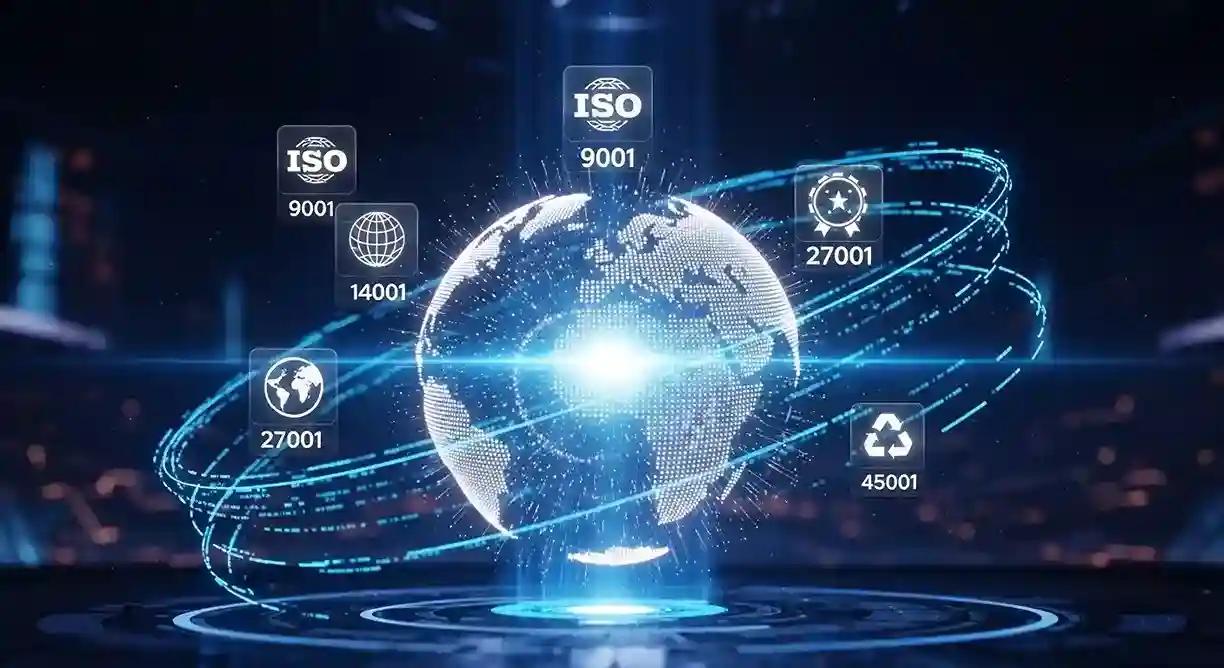
ISO 9001 – Quality Management: the universal baseline for any business wanting to demonstrate consistent quality
ISO 14001 – Environmental Management: for companies reducing their environmental footprint
ISO 45001 – Occupational Health & Safety: protecting workers in physically demanding environments
ISO 27001 – Information Security: safeguarding data in an age of rising cyber threats
ISO 22000 – Food Safety: covering the entire food production and supply chain
ISO 13485 – Medical Devices: quality management for healthcare manufacturers
ISO 50001 – Energy Management: reducing energy costs and carbon output
ISO 22301 – Business Continuity: preparing businesses to survive and recover from disruptions
ISO 37001 – Anti-Bribery: building ethical governance in high-risk sectors
Each of these standards serves a different purpose, which means businesses can certify to the one that is most relevant to their goals — or build up multiple certifications over time as they grow.
For a detailed breakdown of all 12 major types and a practical guide to choosing the right one,
ISO Certification Is Not Just for Big Companies
This is worth repeating: ISO certification is fully accessible to small and medium-sized businesses.
In fact, ISO 9001 — the most popular standard in the world — is designed to scale. Whether you have five employees or five hundred, the principles of quality management apply equally. Many small businesses find that going through the certification process actually helps them spot inefficiencies they didn't know existed, tighten up their processes, and build a stronger team culture around accountability.
The certification process typically follows these steps:
Gap Analysis – Review your current processes against the ISO requirements
Implementation – Update systems, train your team, and document the changes
Internal Audit – Check your own readiness before the official audit
External Audit – An accredited third-party auditor evaluates your systems
Certification – If you pass, you receive your internationally recognised certificate
Most small to medium businesses complete this process in three to six months.
The Mindset Shift That Makes Certification Worthwhile
Many business owners approach ISO certification as a compliance exercise — something they need to tick off a list to satisfy a client or win a contract. That's a valid starting point. But the businesses that get the most out of certification are the ones who treat it as a genuine improvement journey.
ISO standards, at their core, are built around a simple idea: understand what you're doing, do it consistently, measure the results, and keep improving.
When that becomes part of how your team thinks and operates every day — not just during an audit cycle — the benefits compound. Customers notice. Staff perform better. Problems get caught earlier. Growth becomes more sustainable.
A Final Thought
If you've been sitting on the fence about ISO certification, consider this: your competitors are not waiting.
Businesses across every industry are using ISO certification to differentiate themselves, attract better clients, and build the kind of operational foundation that supports long-term growth.
The first step is simply choosing the right standard for where your business is today — and where you want it to go.